
Estate Passport
How we verify a property
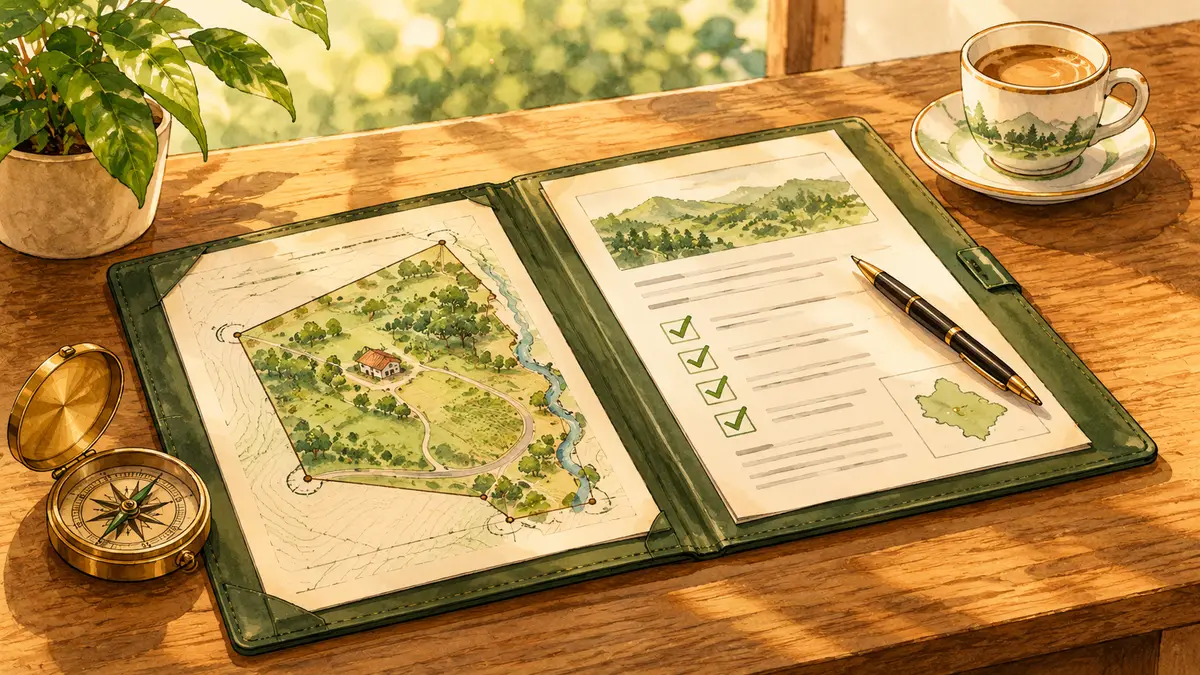
Anyone can post a nice photo. What a buyer needs to know is what has actually been checked — so every listing has a Passport: the site visit, and the document checks as they are recorded.
1. The papers
These records decide whether a sale is clean. A buyer should check them, and we record each one in the Passport as it is done:
- RTC (Pahani) record
- Encumbrance certificate (EC)
- Title & mutation history
- Land type & conversion
- Survey sketch

2. On the ground
Then we walk the property. In Kodagu, a lot of what matters only shows up on site — and in the right season:
- Boundary walked
- Road access & condition
- Water source seen in summer
- Monsoon road access
- Jio signal on site
- Electricity
- Elephant activity nearby
- Slope


3. The Estate Passport
Every listing has an Estate Passport: a one-page record of each check. You can open it, print it or save it as a PDF and send it to family.
Only checks that were actually done appear on it. Items without details read “Details not added yet” until they are added. We never fill a gap with a guess.

What “Acres Verified” means
The badge appears only when both the RTC (Pahani) and the Encumbrance Certificate have been checked and recorded in the passport. Sample listings never carry it.

Owner’s figures are labelled
For coffee estates, numbers like yield, plant age and income come from the owner. We show them under “as stated by owner”, because we haven’t audited them. Ask to see the records.

Photos and illustrations
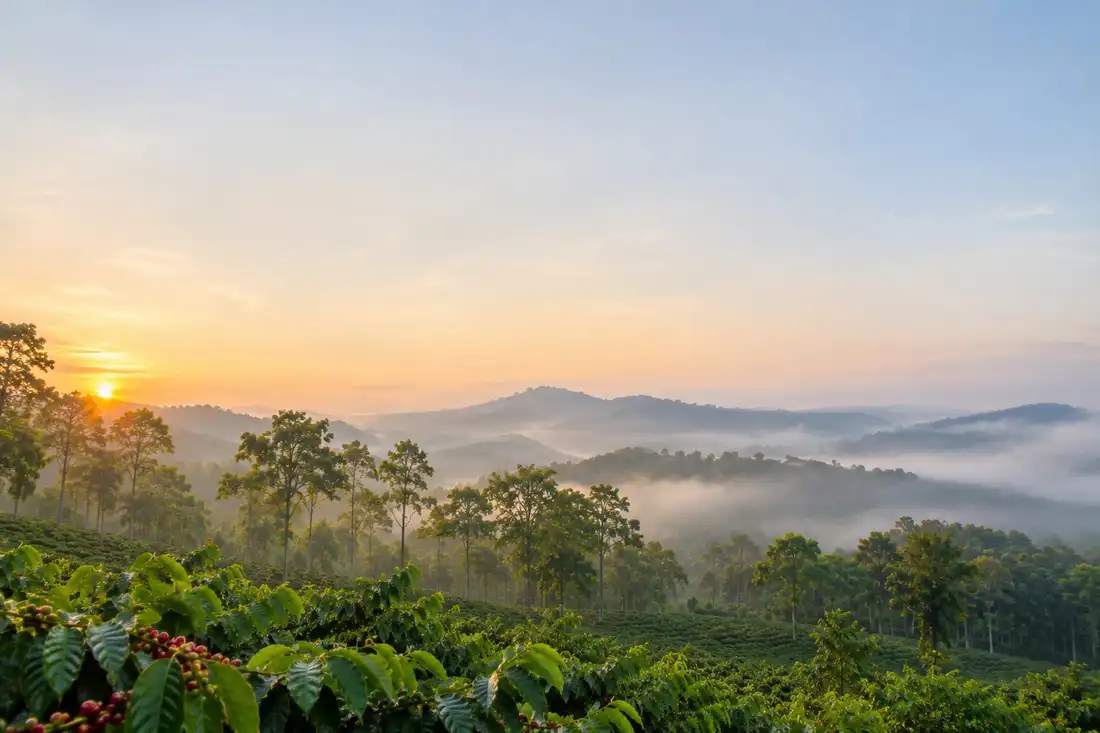
Listing photos are taken on the property. We may brighten or straighten a photo, but we never replace a sky or remove a building or power line. Landscape illustrations on this site are labelled as illustrations and are never used for a listing.
What verification is not
Our checks help you decide whether a property is worth pursuing. They are not a legal title opinion. Before you pay an advance, have an advocate review the documents.